
Purity
Purity is an important first reference, but it should not be the only criterion used when comparing TMDSO suppliers. Buyers should review purity together with reactive content and impurity-related parameters.
CAS 3277-26-7
A reactive organosilicon intermediate used in silicone synthesis and modification. Buyers evaluating a TMDSO source should review purity together with Si-H content, chloride, residual acidity and commercial-batch consistency.
Density at 20 °C: 0.760–0.770 g/cm³
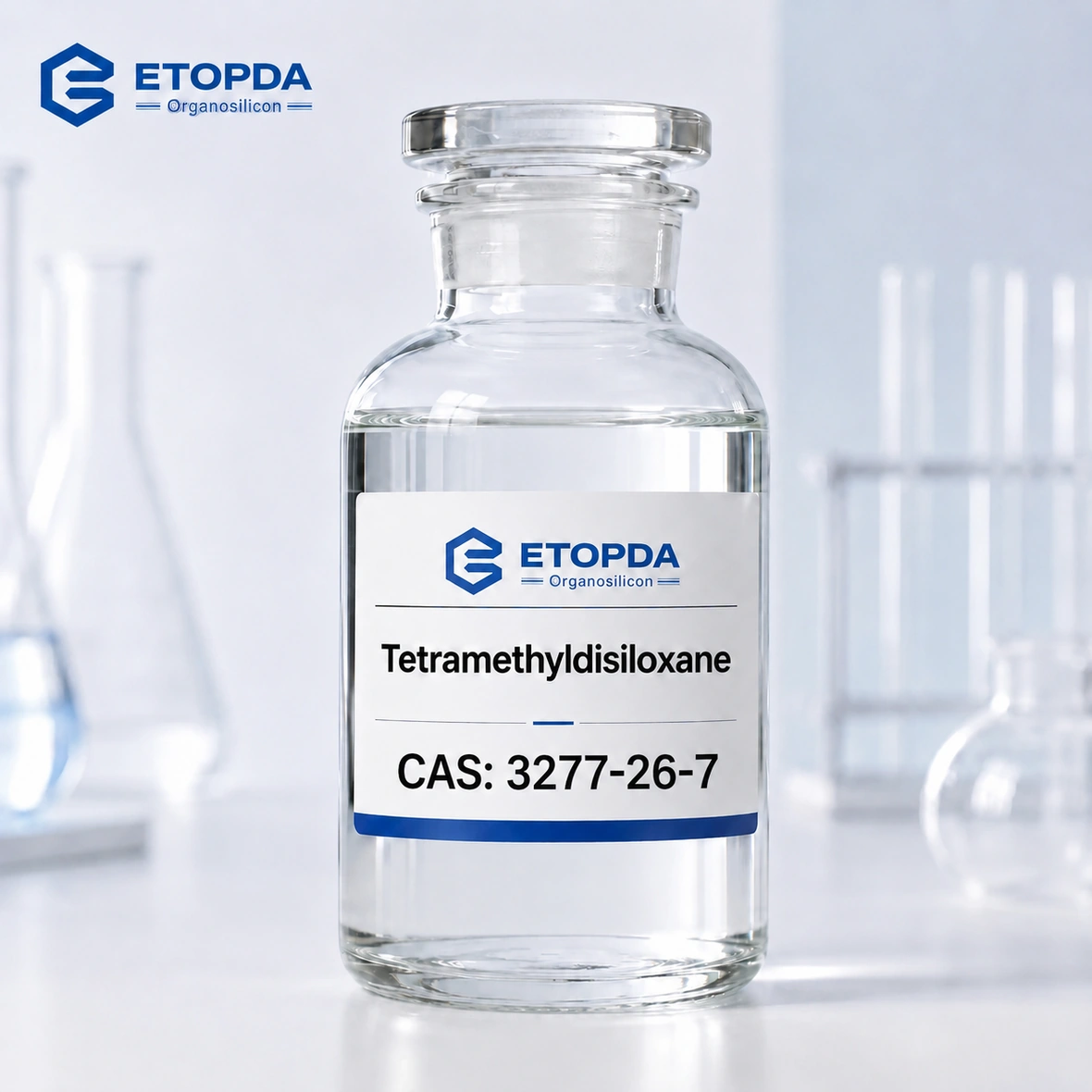
Use these purchasing specification limits as a comparison basis. They are not presented as the test results of a particular batch.
| Product | 1,1,3,3-Tetramethyldisiloxane |
|---|---|
| CAS | 3277-26-7 |
| Purity | ≥99.5% |
| Si-H content | ≥1.39% |
| Chloride | ≤10 ppm |
| Residual acidity | ≤10 ppm |
| Density at 20 °C | 0.760–0.770 g/cm³ |
Purity is an important first reference, but it should not be the only criterion used when comparing TMDSO suppliers. Buyers should review purity together with reactive content and impurity-related parameters.
Si-H content reflects reactive hydrogen functionality and can be relevant when evaluating TMDSO for synthesis, addition or modification processes.
Elevated chloride may create concerns in sensitive downstream synthesis or catalyst systems. Buyers evaluating a new TMDSO source should therefore compare chloride together with purity and Si-H content.
Residual acidity may be relevant to material stability and sensitive downstream processing. It should be reviewed together with other quality indicators when qualifying a new source.
Before approving a new TMDSO source, confirm:
Compare suppliers on the same technical basis before comparing price.
A successful sample is only one step in supplier qualification.
Confirm the agreed specification and review the commercial-batch COA.
Confirm packaging, batch quantity and order quantity.
Align the required delivery window with the commercial supply plan.
Confirm DG or transport arrangements and the required documentation.
Reactant for hydrosilylation to prepare functionalized siloxane derivatives.
Intermediate used in the preparation of hydride-functional silicone fluids, silicone resins and specialty organosilicon compounds.
Chemical reagent in supported organic and organosilicon synthesis applications.
Application suitability should be verified by the buyer for the specific formulation and process. Review application pathways →
The current product page confirms 150 kg net per steel drum. Alternative packaging options may be discussed for the actual order and must be confirmed before supply.
Documentation availability may depend on the product, destination and shipment requirements.
When comparing TMDSO COAs, purity should be reviewed together with Si-H content, chloride, residual acidity and batch identification.
Use a consistent set of specification fields when reviewing a supplier and its latest batch document.
Read the TMDSO COA Guide →Understand why reactive hydrogen content is reviewed alongside purity and trace parameters.
What Does Si-H Content Tell a TMDSO Buyer? →No. Purity is a starting point. Buyers should also compare Si-H content, chloride, residual acidity, batch identification and the agreed commercial-batch specification.
Si-H content reflects reactive hydrogen functionality and may be relevant when evaluating the material for the intended synthesis, addition or modification process.
Elevated chloride may concern sensitive downstream synthesis or catalyst systems, so it should be reviewed with purity and Si-H content.
Confirm the agreed specification, commercial-batch COA, packaging, order quantity, lead time, shipment arrangement and required documents.
Buyers can discuss the latest batch COA, SDS, TDS, packaging information and DG or transport documents where applicable. Availability depends on the destination and shipment requirements.
The current product page confirms 150 kg net per steel drum. Any alternative packaging should be confirmed for the actual order before supply.
Provide the product identity, target specification, required quantity, packaging preference, destination, timeline, application or evaluation requirements and required documents.
Start with the latest available COA, a sample discussion or the specification and shipment requirements for your planned order.